
Restroom and handwashing access are basic job site functions that help construction in Greater Houston run safely and efficiently. When facilities are sized correctly, placed in the right locations, and serviced on a reliable schedule, crews stay closer to their work, the site stays cleaner, and it is easier to meet OSHA expectations.
Managers already know they need construction site portable toilets for their projects. What is less clear is how to determine the right number of units, how to position them on a busy job site, and how often those facilities should be cleaned and resupplied to keep conditions acceptable for the entire crew.
Understanding the role portable toilets and handwashing stations play in daily operations is the starting point for making those decisions, from compliance and crew comfort to how the job site looks to owners, inspectors, and neighbors. From there, sanitation planning becomes a practical question of counts, placement, and servicing that support both your crews and the work to be done.
Why Construction Site Portable Toilets Matter for Your Job
Portable toilets are easy to ignore when they are working well. Crews use them, they stay clean, and no one has to leave the job site to find a restroom. When they are undersized, poorly placed, or not serviced often enough, they become a daily frustration for workers and a headache for project leadership.
On a busy construction project, restroom facilities are not just a “nice to have.” They shape productivity, morale, and how owners, neighbors, and inspectors see your job site. Choosing the right portable toilets and handwashing stations helps you:
- Keep crews focused on work instead of walking off-site
- Reduce complaints about cleanliness and odor
- Present a professional, well-run job to everyone who visits
Poor restroom access often shows up as longer breaks, more time walking off-site, and growing frustration from the crew. In practice, portable toilets on well-run sites are planned with those day-to-day pressures in mind, not just to meet a minimum requirement.
The Cost Of “Making Do” On Job Sites
When the closest restroom is a gas station down the street, you are paying for every trip. A few minutes here and there for 20 workers adds up quickly over the life of a construction project. Crews will still find a way to use the restroom, but you just lose control over the timing and experience.
Trying to “make do” with too few units or rarely serviced portable toilets often leads to:
- More downtime as workers leave the job site to find facilities
- Frustration between trades when restrooms are dirty or out of supplies
- Negative attention from nearby businesses and homeowners
A simple, right-sized sanitation solution is usually far less expensive than the hidden cost of lost production.
Health, Safety, And Compliance Expectations
Additionally, OSHA regulations and ANSI standards exist to protect workers on construction sites. They define the minimum number of restroom facilities, how they should be supplied, and how often they should be cleaned and serviced. Meeting those standards is the baseline for a safe working environment.
If you need a clear overview of regulatory expectations, start with these resources:
- OSHA Requirements For Portable Toilets
- Meet OSHA Requirements For Construction Portable Toilets
- Why OSHA Restroom Rules Matter
These overviews break the rules down into practical guidance you can apply on your next job site.
OSHA And ANSI Requirements In Plain Language
OSHA and ANSI standards can feel abstract until you need to apply them to a specific project. In practice, they tell you how many toilets you must provide, what those toilet facilities must include, and how they should be maintained.
Minimum Number Of Restroom Facilities
The minimum number of portable toilets on a job site is tied to crew size. Standards give you a clear starting point so that everyone on site has reasonable access to restroom facilities.
As your crew grows, the minimum number increases. Multi‑shift projects, long hours, and scattered work areas may require more units than the bare minimum. OSHA’s basic requirements for construction sites include:
- 1 toilet for 20 or fewer workers
- 1 toilet and 1 urinal for 20–200 workers
- 1 additional toilet and 1 additional urinal for each 40 workers over 200
These numbers are set as minimums to ensure workers have reasonable access to restroom facilities over the course of a shift. On many construction sites – especially in the Houston heat, with larger crews or long days – it can be practical to provide more units than the minimum to reduce lines and maintain acceptable conditions.
Multi-shift projects, long hours, and scattered work areas may require more units than the bare minimum to satisfy OSHA requirements. For more information to support planning, see How Many Toilets Per Person Does OSHA Require On A Construction Site?
What Counts As A Compliant Toilet Facility
A compliant portable toilet facility is more than a box with a door. It must be safe, sanitary, and supplied. That includes:
- Enough units for the number of workers on site
- Toilet paper and basic supplies in each unit
- Proper waste disposal and containment
- Access that does not create hazards for workers
Not sure which unit type is best for your construction project? Refer to our guide on the available types of portable toilets, which walks through basic portable restrooms, higher‑comfort options, and when each makes sense.
How Often Facilities Should Be Serviced
Providing portable restrooms is only half the job. They also need to be cleaned, pumped, and resupplied often enough to keep them usable.
The ANSI baseline for servicing assumes a 40‑hour workweek and ties frequency to how many people use each toilet:
- Up to 10 people per toilet: serviced a minimum of once per week
- Up to 20 people per toilet: serviced a minimum of twice per week
A simple way to think about this on a typical construction site is to start with that baseline and then adjust based on how hard the units are working. As a rule of thumb, when more than 10 people share a single unit, it is usually better to increase servicing rather than wait for conditions to deteriorate.
In practice, service frequency often needs to go beyond the minimum schedule when:
- Crew Size Is High: More than 10 people consistently using the same unit will fill it faster and wear supplies down more quickly.
- Weather Is Hot Or Humid: Heat accelerates waste decomposition and intensifies odors, which can require more frequent pumping and chemical refreshing.
- Work Is Heavy Or Hours Are Long: Physically demanding work and shifts longer than 40 hours per week increase overall usage and strain on each unit.
OSHA considers a dirty, overfilled, or unstocked unit to be a violation, regardless of how recently it was serviced on the calendar.
In practice, regular servicing protects the work environment, reduces complaints, and helps you stay aligned with OSHA standards. Providing temporary restrooms that enhance employee comfort can have a tremendous positive impact on day-to-day use, while naturally ensuring compliance.
How Many Portable Toilets Do You Need On Your Job Site?
Every superintendent and project manager needs a quick way to answer the “how many” question. The right number of construction site portable toilets depends on more than just a headcount, but crew size is the best starting point.
Simple Rules Of Thumb For Different Crew Sizes
When planning unit counts, start with the OSHA/ANSI minimums and then build in a small buffer to ensure restrooms remain usable throughout the shift. For most construction sites, the following ranges work well:
- Up to 10 Workers: Plan for 1 portable toilet.
- 11–20 Workers: Plan for 2 portable toilets (even though 1 is the minimum).
- 21–40 Workers: Plan for 3 portable toilets.
- 41–60 Workers: Plan for 4 portable toilets.
- More Than 60 Workers: Start with 4 portable toilets, then add 1 additional unit for roughly every 15–20 workers beyond that.
These counts assume a standard 40‑hour workweek. On multi‑shift projects, in hot or humid conditions, or on sites with long walks between work areas and restroom facilities, it is often better to match or slightly exceed these recommendations rather than rely on the bare minimum.
Factors That Change The Math
No two construction sites are exactly the same. You may need additional units when:
- Crews work overtime or on weekends
- Work is spread across multiple floors or distant parts of a site
- You have subcontractors and inspectors regularly visiting the job
In these cases, adding extra portable toilets or spreading units across the job site can reduce walking time and keep crews closer to their work. For guidance on matching unit counts to real-world conditions, use our resource on construction-site portable toilets in Houston, featuring examples from local projects.
Where To Place Portable Toilets And Handwashing Stations
Placement is just as important as the number of units. Good placement helps your crews use the facilities without wasting time, while still preserving the construction site’s look and feel.
Placement That Keeps Crews Productive
Your goal is to make restroom facilities easy to reach from active work areas without disrupting workflows. That usually means:
- Locating units near main paths through the job site
- Avoiding steep grades, unsafe edges, or tight spaces
- Placing handwashing stations where crews naturally pass by before breaks or meals
When crews have to cross a busy job site or leave the fenced area to reach a portable restroom, you are losing time and creating new safety concerns.
Protecting The Working Environment And Neighborhood
Many construction sites sit next to homes, businesses, and busy streets. Portable toilets that are visible from a front door or sidewalk will draw attention, especially if they look neglected. To keep a professional image:
- Face doors away from public view when possible
- Avoid placing units directly against neighboring properties
- Consider odor and noise when choosing locations
Have specific questions about placement? Learn more about how to ensure proper access to portable construction site toilets and address placement challenges.
Allowing Safe Access For Servicing
Service trucks need safe, clear access to your portable toilets and handwashing stations. When you plan locations, think about:
- Clear paths for trucks to reach the job site
- Turning space and surface conditions near the units
- Avoiding blocked access behind stored materials or equipment
If service crews cannot reach a unit, they cannot pump, clean, and resupply it. Good access planning keeps facilities serviced and reduces last-minute scrambling.
Building A Complete Sanitation Solution For Your Construction Site
A strong sanitation plan covers more than just toilets. It includes handwashing, servicing, and the right mix of equipment for the work you are doing.
Portable Toilets, Portable Restrooms, And Restroom Trailers
Most construction sites rely on standard portable toilets, but there are times when upgraded portable restroom units or restroom trailers are worth considering. For example:
- Higher-comfort options near site offices or sales centers
- Longer-term projects with heavy daily usage
- High-visibility locations where owners and the public see your setup
To compare basic units with more advanced options, review our guide to the types of portable toilets and consider what fits your project image and budget.
Handwashing Stations And Hygiene Add-Ons
OSHA standards and best practices call for access to handwashing on jobs involving dirt, dust, chemicals, or food. Adding handwashing stations alongside portable toilets helps crews work safely and comfortably by providing:
- Soap and clean water
- Towel or air-drying options
- A clear place for workers to clean up before meals and breaks
In many cases, combining portable toilets with dedicated handwashing stations creates a more complete sanitation solution than relying on restrooms alone.
Service Schedules That Match The Work
Even the best equipment will not perform well if it is not serviced often enough. When you build your sanitation plan, talk through:
- Expected crew size over the life of the project
- Seasonal changes that affect usage and odor
- Work patterns that may require more frequent visits
Regular servicing ensures that facilities are cleaned, pumped, and restocked with toilet paper and supplies. That helps you maintain a healthy work environment and stay in line with OSHA standards.
Our Construction Site Portable Toilets And Handwashing Options
Every construction site in Greater Houston has different needs based on crew size, project type, and site conditions. Texas Outhouse offers a lineup of portable toilets and handwashing units that can be combined to build a sanitation plan that fits the way your crews actually work.
Portable Toilet Selection For Construction Sites
Portable toilets form the core of most construction site sanitation plans. They give workers on-site access to restroom facilities without leaving the job, and they can be scaled up or down as crews change.
Consider the comprehensive list of rental options from Texas Outhouse for construction sites:
- Standard Portable Toilets: Durable, OSHA-aligned units sized for everyday use on construction sites, supplied with toilet paper and serviced on a set schedule.
- Women’s Portable Toilets: Standard units designated and supplied specifically for women on mixed crews, supporting comfort and privacy.
- Air Conditioned VIP Portable Toilet: An upgraded unit that offers a higher level of comfort, ideal for site offices, supervisors, or locations where owners and visitors are regularly on site.
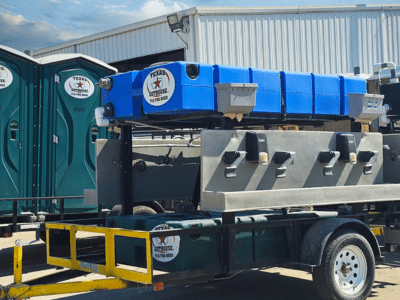
- 2-stall Mobile Restroom & Handwash: A compact unit with two separate restrooms and an integrated handwash station that can be mobilized on a trailer.
- Caged Lift-Eye Can: A fully enclosed portable toilet designed to be lifted safely by crane, protecting the unit during hoisting on busy, vertical construction projects.
- Lift-Eye Portable Toilets: Caged units designed to be lifted by crane and placed on elevated decks or high-rise levels so crews do not have to come down multiple floors to find a restroom.
- Elevator Toilet Half-Can: Narrow-profile units that can fit into construction elevators, giving workers access to restrooms on upper levels during vertical construction.
- Can-On-Wheels: A standard portable toilet mounted on a wheeled base, allowing the unit to be moved easily around the job site as work areas shift.
- ADA Compliant Portable Toilets: Larger, ground-level units built to meet ADA requirements, providing compliant access where your project must offer adequate restroom facilities.
- Wheelchair Accessible Portable Toilets: Spacious, ramped units that accommodate wheelchairs, mobility devices, or anyone needing more room and easier access than a standard portable toilet offers.
These options can be mixed and maneuvered on a single job site. For example, you may want to place standard units at ground level, lift-eye units on elevated decks, and an ADA unit near the main entry or site office. Our knowledgeable team can help you identify the best placement for each unit.
Handwashing And Sanitizing Units For Construction Sites
Handwashing and sanitizing units are often placed next to restroom facilities or near break areas. Common rental options for construction sites include:
- 2-Man Handwash Station: Compact handwashing units with two sinks, soap, and water, often paired directly with a small cluster of portable toilets.
- 10-Man Heated Handwash Stations: Larger, heated-water units with multiple wash points, useful for big crews or high-traffic break areas, especially in cooler or early-morning conditions.
- 12-Man Handwash Stations: High-capacity wash stations that support larger sites and help reduce lines at mealtimes and shift changes.
- Hand Sanitizer Towers and Pumps: Freestanding sanitizer dispensers that supplement, but do not replace, handwashing at certain work areas or access points.
Using the right mix of portable toilets and handwashing units helps stay aligned with OSHA requirements and maintain a cleaner, more comfortable work environment for everyone on site.
Planning For Different Types Of Construction Sites In Greater Houston
Construction in Houston can range from single-home projects to large industrial facilities. Each setting has its own sanitation needs and constraints.
New Home Projects And Neighborhood Jobs
New home construction and major remodels in established neighborhoods come with tight lots, narrow streets, and close neighbors. Portable toilets and handwashing stations need to:
- Fit on site without blocking driveways or sidewalks
- Look presentable from the street
- Allow access for service trucks on busy residential roads
A focused plan for portable toilets on these sites helps you protect both crew productivity and neighborhood relationships.
Commercial Projects And High-Visibility Sites
Commercial jobs near office buildings, retail centers, and medical facilities often sit in front of customers and tenants every day. On these construction sites, temporary restroom facilities can make an impression – good or bad.
For projects where image matters, you may want to consider when portable restrooms or restroom trailers are appropriate. Our article on temporary restrooms for employees during disruptions can help you think through expectations for on-site staff and visitors.
Industrial And Heavy Construction Sites
Industrial projects, plants, and infrastructure work often run for long durations with large crews and demanding conditions. During these projects, sanitation solutions need to be durable, easy to service, and flexible enough to move as the job site shifts.
Or, when an unplanned event affects restroom facilities – such as a water line break, power loss, or weather event – emergency portable toilets are essential for quickly restoring temporary restroom facilities.
A Restroom and Handwashing Checklist For Your Next Job Site
A basic checklist can help you plan for portable toilets and handwashing stations at the construction site before the first worker arrives at the job site.
Before Work Begins
- Confirm expected crew size and project duration
- Review OSHA requirements and ANSI guidelines for minimum restroom facilities
- Sketch likely unit placement and access routes for service trucks
- Decide how many portable toilets and handwashing stations you need to start
- Reserve portable toilets and handwashing stations at least 1–2 weeks in advance for standard projects, and 3–4 weeks in advance for large crews or complex sites
Not sure about the official timeline of when the work will begin or the size of the crew? Call us in advance at 713-903-8176, and our team can get you started with an estimate.
During The Project
- Monitor cleanliness and supply levels between service visits
- Watch for bottlenecks or long walks to restroom facilities
- Work with our team to adjust placement if parts of the job site shift or new areas open up
When Conditions Change
- Increase units or service frequency when crews ramp up
- Add handwashing stations when work conditions demand it
- Plan for emergency backup if your primary facilities are disrupted
Working from this checklist and staying in touch with the Texas Outhouse team makes it easier to stay ahead of sanitation issues during construction.
How Texas Outhouse Supports Construction Projects In Greater Houston
Texas Outhouse works with construction sites across Greater Houston – from small residential projects to large commercial and industrial jobs. Our goal is to make sanitation solutions one less thing supers, project managers, and safety leads have to worry about.
We help you:
- Choose the right number and type of portable toilets and handwashing stations for your crew
- Plan placements that work for both workers and service trucks
- Set service schedules that keep facilities clean and stocked throughout the project
If you are planning your next construction project and want a simple, practical sanitation plan, our team can help you match real-world conditions to the right portable restroom facilities.
Take the Next Step Today
Talk with Texas Outhouse about renting construction site portable toilets and handwashing stations for your next job in Greater Houston.
– Contact us directly through our website to request a quote on units for your next project.
– Call us at 713-952-1000 to speak with a local customer service representative here in Houston about rental options and scheduling.