
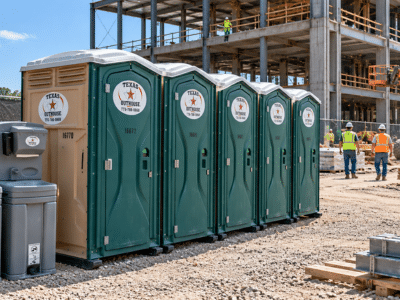
Portable toilets on construction sites need to do more than satisfy a line item on the mobilization checklist. They have to be accessible to the crew, practical to service, and positioned where changing work zones will not make them difficult to reach.
For superintendents and project managers, placement is part of the overall site plan. Crew count, project phase, access routes, servicing frequency, and the location of active work all affect where restroom and handwashing equipment should go.
OSHA Minimum Requirements Are the Starting Point
The Occupational Safety and Health Administration sets minimum toilet requirements for construction jobsites under 29 CFR 1926.51. For 20 or fewer employees, OSHA requires at least one toilet facility. For larger crews, the standard increases the required number of toilet seats and urinals based on workforce size. OSHA also addresses temporary field conditions and washing facilities.
Current OSHA requirements should be reviewed for the specific project and work being performed. A minimum equipment count is only one part of the plan, and renting a particular unit does not by itself establish that the entire jobsite meets every applicable requirement.
Where Should Portable Restrooms Go?
Placement should reflect where people are working, not simply where open space happened to be available during initial mobilization.
On a small jobsite, one restroom area may provide workable access. On a larger or phased construction project, placing every unit in one distant location can create unnecessary travel for crews working elsewhere.
Consider active work zones, trailers, break areas, access points, and the routes crews normally use. We support standard and specialized portable toilets for construction environments, including phased jobsites, fenced locations, high-rise work, and other temporary applications.
Plan for Delivery and Service Access
A convenient location for workers also has to be workable for the service team.
Portable restrooms require scheduled cleaning and replenishment, so placement should allow room for delivery, servicing, relocation when scoped, and eventual removal. Gates, fencing, stored materials, traffic patterns, and active work can all affect that access.
It helps to consider service routes before the units are placed rather than after site conditions make them difficult to reach.
Handwashing Stations Belong Near High-Use Areas
Handwashing equipment should be positioned where workers can use it as part of their normal movement through the site.
We identify appropriate locations near restrooms, work or lunch areas, entries, and other high-use zones according to the site layout. Handwashing equipment can be rented alongside portable restrooms or separately, with servicing and replenishment matched to equipment count, use, and duration.
Depending on the work being performed, OSHA may also require specific washing facilities for employees exposed to harmful substances. Hand sanitizing equipment should not automatically be treated as a substitute where the applicable standard requires washing facilities.
Source: OSHA 29 CFR 1926.51
Keep Units Clear of Jobsite Traffic and Work Areas
Construction sites change quickly. Equipment routes shift, materials arrive, fences move, and new work areas open.
Portable restrooms and handwashing stations should remain accessible without unnecessarily conflicting with vehicle movement, equipment activity, work-zone boundaries, or the paths employees normally use.
The goal is a restroom setup that fits the working environment rather than becoming another obstacle for the superintendent to manage.
When Should the Placement Plan Be Reviewed Again?
The setup established at mobilization may not remain appropriate through every phase of a construction project.
Review the plan when crew counts change significantly, new work areas open, access routes shift, or the current service schedule no longer matches usage. Construction buyers often need counts, locations, and servicing to adjust as trades and project phases change.
Any requested relocation, additional equipment, or service change should be confirmed for the specific project, including availability, access, timing, and revised scope.
Build the Restroom Plan Around the Jobsite
Good placement of portable toilets on construction sites comes down to worker access, serviceability, site conditions, and a plan that can adapt as the project progresses. OSHA minimum requirements establish an important baseline, but the working environment still requires site-specific planning.
Planning portable toilets and handwashing stations for a construction site in Greater Houston? Contact Texas Outhouse today to request a quote. Share your project location, crew count, schedule, work areas, and access details, and our team will help scope the equipment, placement, and service schedule for the job.